 ▾
▾

Fireworks are safe when handled correctly. Follow the guidelines below to create a safe show for yourself and others.
Use protective equipment
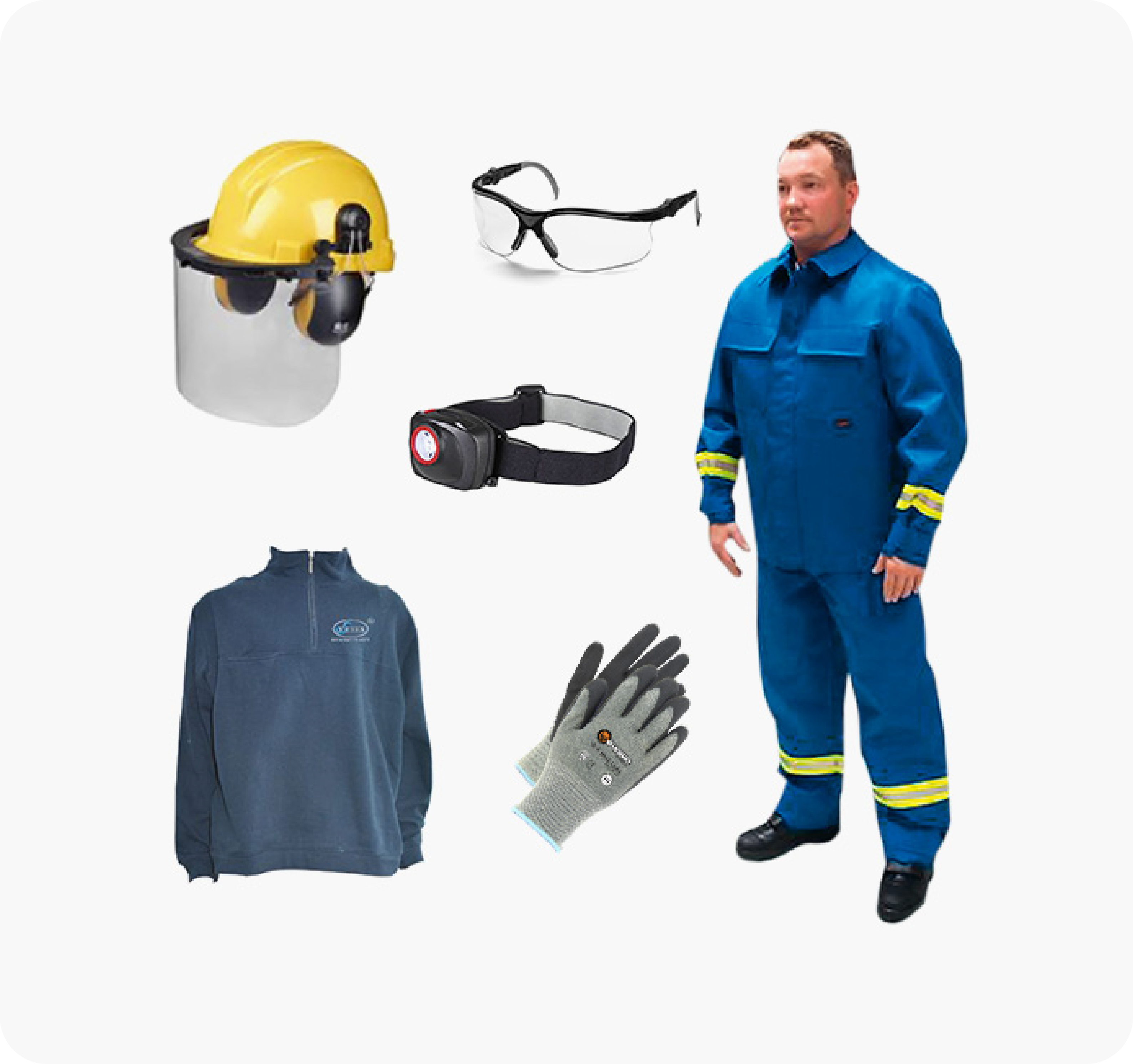
At professional shows we always use protective equipment — and you should too.
Head and face protection:
- Safety goggles
- Hearing protection
- Helmet
A helmet with everything integrated is also fine, provided it has a forestry visor.
Protect your body with:
- Clothing that does not catch fire easily, such as cotton or flame-resistant material.
- Gloves — cut off half of the thumb and index finger so that you can work with them on.
- Sturdy footwear.
A head torch is important — so that you can see what you are doing while keeping your hands free.
Mark positions in advance
Mark the spots where you will place your fireworks shells during the day, while it is still light. Put up barrier tape in advance so that no unauthorised people can enter your firing area.
You can even lay out the fireworks in advance. Protect them from moisture from below by placing them on a fibre board, and cover them with a tarpaulin or cut-open plastic bag to keep off rain or snow.
Prepare as much as you can in advance!
Set fireworks shells securely
One of the most important tasks for a responsible pyrotechnician is to make sure that shells can never tip over. This applies in particular to cakes.
They are designed to remain upright when fired from a flat and stable surface, but such a surface does not exist in a wintry Finland. You can solve this in a number of ways, for example:
- Drive stakes into the ground to support the cakes.
- Drive nails into a chipboard panel and secure with silver tape around the shell and the nails.
- Tape several cakes together into a single stable unit.
- Fountains and Thunder King shells can be attached to a plank or board by pressing them in place with a few clicks of a glue gun.
Think about how you light
If you are using a gas lighter to light the shell, direct the flame towards the end of the fuse from the side, at a 90-degree angle to the fuse.
Do not point the lighter directly at the shell! Burning directly onto the shell can in the worst case cause a tube explosion.
Keep the space above the shell clear
Let nothing get in the way of the shell’s trajectory — especially not body parts. Watch your head!
Stay sober
Fireworks often feature at festive occasions where you might normally have a few drinks. But when you are firing a show, the champagne can wait until you are done!
Throughout all preparations and the firing of the show, you as the pyrotechnician are responsible for your own and others’ safety, and must therefore be completely sober.